Free play for kids: why a no-rules game still teaches
Most "learning" apps for kids have the same skeleton. Pick a level. Answer some questions. Earn stars. Move to the next level. The structure is reassuring to parents because it looks like a school assignment, and it is reassuring to children because the rules are clear.
But the structure is also doing something quieter that parents notice less. It is teaching the child that the point of the activity is to satisfy the app — to earn the star, to clear the level, to be told they got it right. Over time, a kid who only plays these games starts to flinch at anything without a scoreboard. The blank page becomes scary.
Free play is the opposite. A blank canvas, a bucket of Lego, an empty sandpit, a tray of dough — no levels, no stars, no right answer, nothing to clear. The child decides what they are doing, when it is done, and whether it was good. That sounds small. It is not. It is most of what their brain needs at three, four, five, and six.
What free play actually builds
From what we have watched at home, and what the early-childhood literature keeps circling back to, the list is short:
- Planning. "I will make a house. The roof goes on top." This is the same mental motion that later becomes "I will write three sentences. The topic comes first."
- Spatial reasoning. Where does the door go relative to the window? This skill maps directly onto geometry, packing a school bag, and reading a map.
- Decision-making with no rubric. Picking red over green for the chimney is a tiny choice. A child making 200 of those tiny choices a week becomes a child who can choose what to draw or what to wear without freezing.
- Tolerance for ambiguity. The shape you ended up with is not the shape you imagined. Free play teaches the child that "different from the plan" is not "wrong" — it is just what happened. Children who can sit with that are children who can write a second draft.
None of this shows up on a star meter. All of it shows up in school three years later.
"But how do they learn anything if no one is checking?"
This is the question every parent asks the first time they watch a child spend twenty minutes putting blocks down and taking them off and putting them down again with no apparent goal.
The short answer: the checking is happening inside the child's head, not in the app. When a four-year-old places a block and then takes it off because it "looks wrong", they are running the exact loop a software engineer runs at work — make a thing, look at the thing, judge the thing, change the thing. The loop is the skill. Calling out "correct" or "incorrect" from outside actually interrupts that loop, because it takes over the judging step.
This is also why a child can play with the same set of blocks for years without getting bored. The entertainment is that internal loop running. The blocks are just the medium it runs on.
What a good free-play game looks like on a screen
Most screen games for kids are not free-play games. They are levelled games with friendly characters on the start screen. A real free-play game has a different shape:
- No win state. Nothing on the screen says "Level cleared!" or "You did it!" when the child reaches some target. The child decides when they are done.
- No fail state. Nothing turns red, no buzzer, no "Oops, try again" — because there is nothing to be wrong about.
- Persistent canvas. The work the child does stays visible. They can step back, look, decide whether to add more. This is the same affordance a piece of paper has.
- Saveable. A child who has built something for ten minutes wants to show it to someone. A game with no save button — where the work is just gone when you leave — is teaching the wrong lesson about effort.
- No timer pressure. No countdown, no "hurry up" animation. Time is the child's, not the app's.
Block Builder on epotli is our take on this shape. A grid that grows as you build, thirty colours, no levels, no points, no end. Tap a colour, tap a square, place a block. Tap a placed block to take it off. Tap save when the picture looks done — which is whenever the child says it is done.
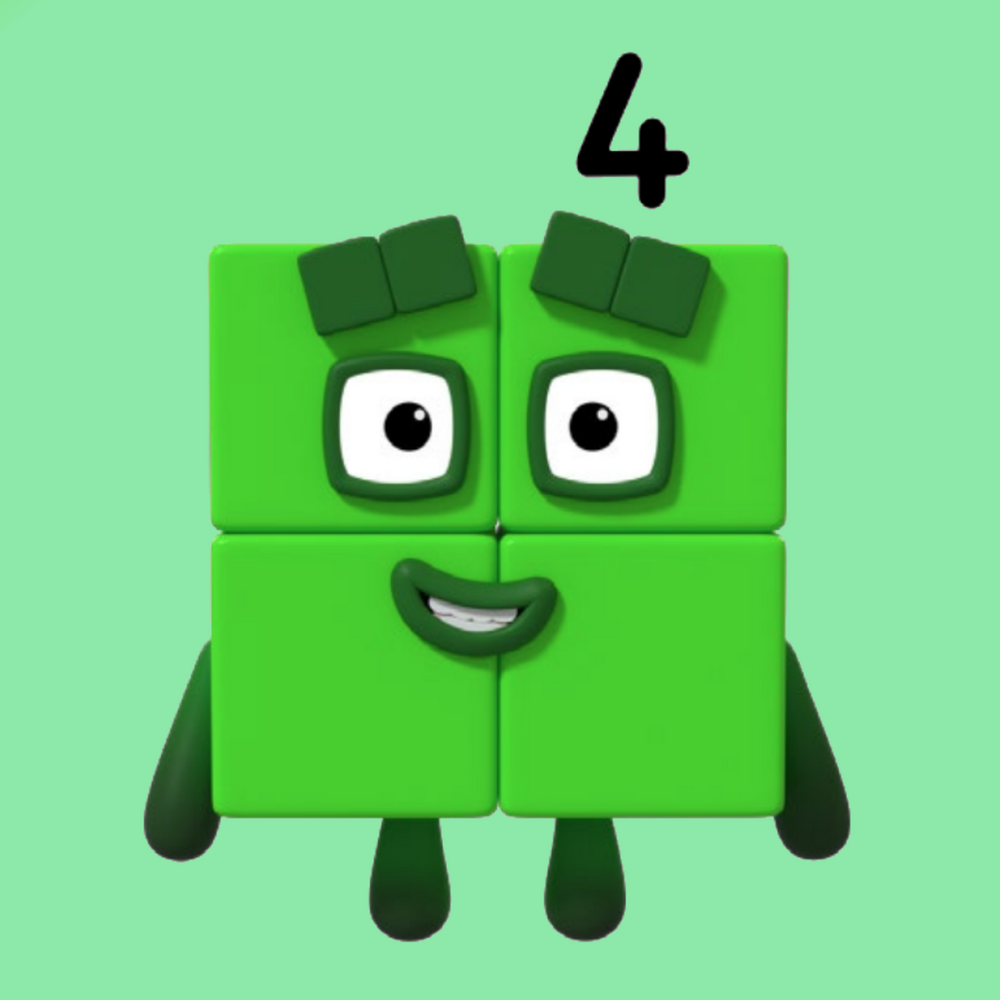
The image above is a good prompt for a first session — show your child a number figure built from blocks (we use the BBC Numberblocks characters as inspiration cards inside the game itself), and let them try to copy it with the in-game palette. After they have copied a couple, they almost always abandon the inspiration and build something of their own. That is the moment the free play actually starts.
How to set up a free-play session at home
A few practical notes from running these sessions with our own kids at home:
- Sit nearby, do not narrate. A child building in silence is concentrating. A parent saying "wow, that is a great house, what colour is that?" every fifteen seconds is interrupting the loop. Your job is to be the bench they come back to.
- Resist the urge to fix. If your child puts the door on the roof, the door is on the roof. They will figure out it does not work, or they will be making a flying house, and either way it is theirs.
- Ask one question at the end. When they say "done", look at what they made, and ask one open-ended question — "tell me about it" works for almost any age. The answer is where most of the learning gets cemented, because the child has to put their plan into words.
- Photograph the result. Especially for under-fives, the creation feels real for one more day if it is visible somewhere. We have a small album on the family WhatsApp group called "Tara's blocks". She checks it.
When to push back from free play to structured play
A child who only does free play and never does anything with rules will struggle the first time they hit a worksheet. So the goal is not free play instead of structured play — it is free play alongside it. A reasonable ratio for ages three to six is roughly half-half.
The signal that the balance is right is the child's reaction to a structured task. A child with enough free-play experience will treat a worksheet as one shape of activity among many, and will do it without becoming anxious. A child who has only ever done structured screen tasks tends to either freeze when there is no obvious right answer, or refuse to start the worksheet because it feels like work — both signs the diet was too narrow.