Building numbers with blocks: a 10-minute home activity for 3 to 7 year olds
A child who can recite "one, two, three, four, five" up to ten does not yet know what five is. They know the word that comes after four. Those are different things, and the gap between them is where most early maths anxiety quietly grows.
The fix is to give the number a shape. A five that is five blocks stacked in a column is a five your child can see, count, and touch. The number stops being a sound and becomes a thing. Once a number is a thing, comparing it to another number is the same kind of thinking as comparing two piles of sweets — natural, low-stakes, no flashcards required.
This is the cleanest way to introduce numbers we know, and it is the activity that does the most work for a child between three and seven. Here is how we run it at home.
What you need
The materials matter less than the routine. Any of these work:
- A set of identical building blocks (Lego, wooden cubes, anything that snaps or stacks).
- A small bag of identical small objects (chickpeas, kidney beans, bottle caps, buttons).
- Paper squares cut from a notebook. Plus glue or tape if you want the build to last.
- An infinite grid on a screen. We made Block Builder for this — tap a colour, tap a square, build the number. It saves to a PNG so the build does not vanish.
For under-fives, prefer physical objects. The grip and the noise are part of the wiring. For five-and-up, screen and physical both work, and the screen has the advantage that the kid can save the picture and show it to a grandparent.
The activity, 10 minutes
The whole thing is one repeating pattern:
- Say a number. Out loud, one word: "four".
- The child builds it. Four blocks. Any shape. A row, a square, an L, a tower — the shape is the child's choice.
- Count together. Touch each block and count from one. End on four. Smile.
- Pick the next number. Either go up by one, or jump — both are fine. Keep going until the child loses interest.
That is the whole game. The temptation is to add rules — "make it in a row this time", "use only red", "do it faster". Resist the temptation. The point is for the child to associate the spoken number with a quantity they built themselves. Anything more is overhead.
For ages three and four, stop at five. For four and five, go to ten. For six and seven, take it past ten and let them figure out that ten and one is eleven before you tell them.
What it looks like when it is working
Here are a few numbers built from blocks. We use the BBC's Numberblocks characters as visual prompts inside Block Builder — each character is a specific number's worth of cubes stuck together, which makes the abstract concept "four" land instantly as a shape.
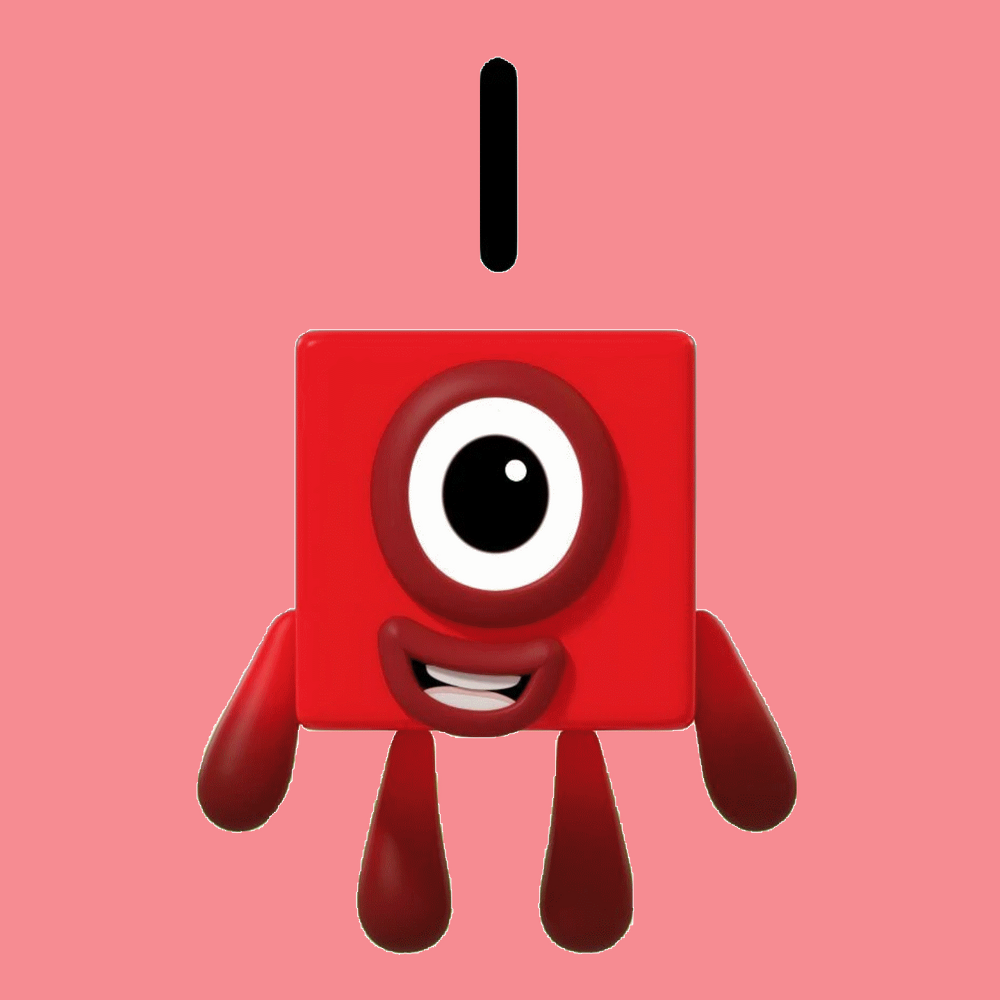
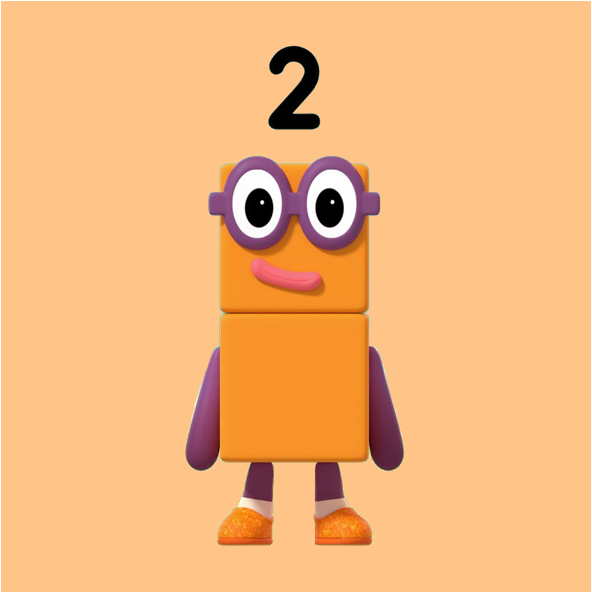
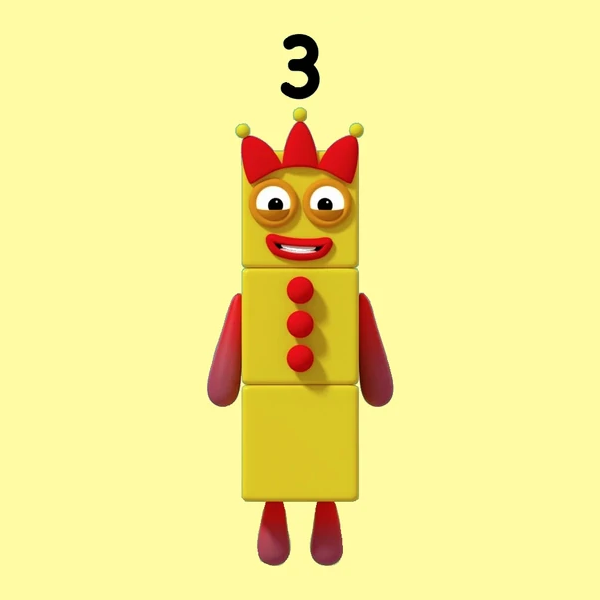
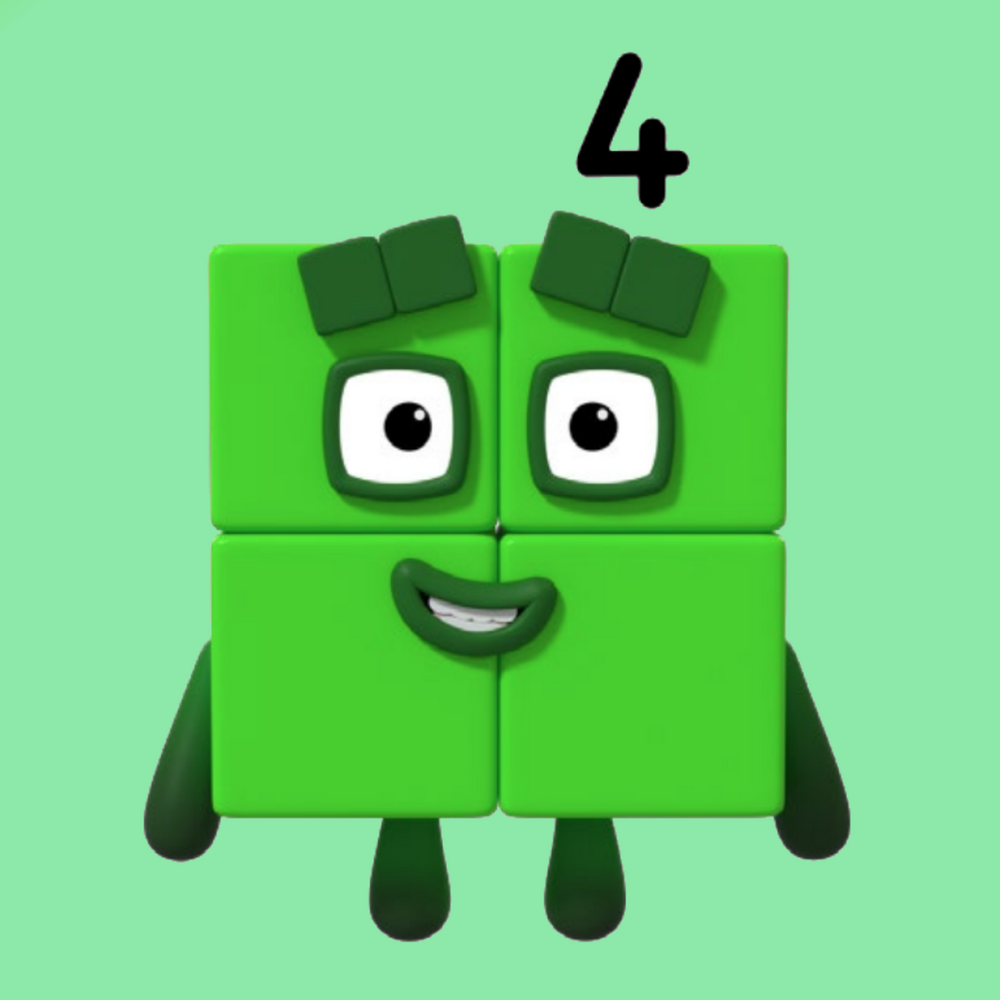
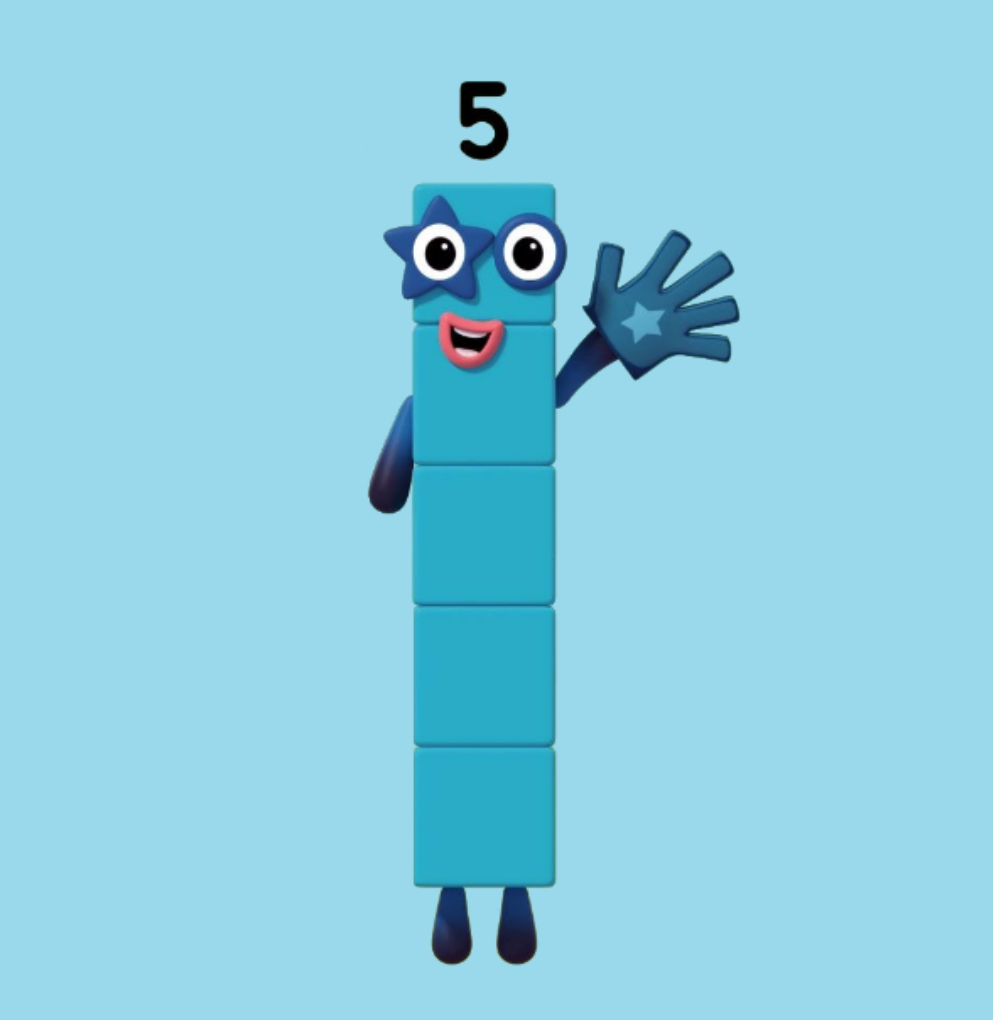
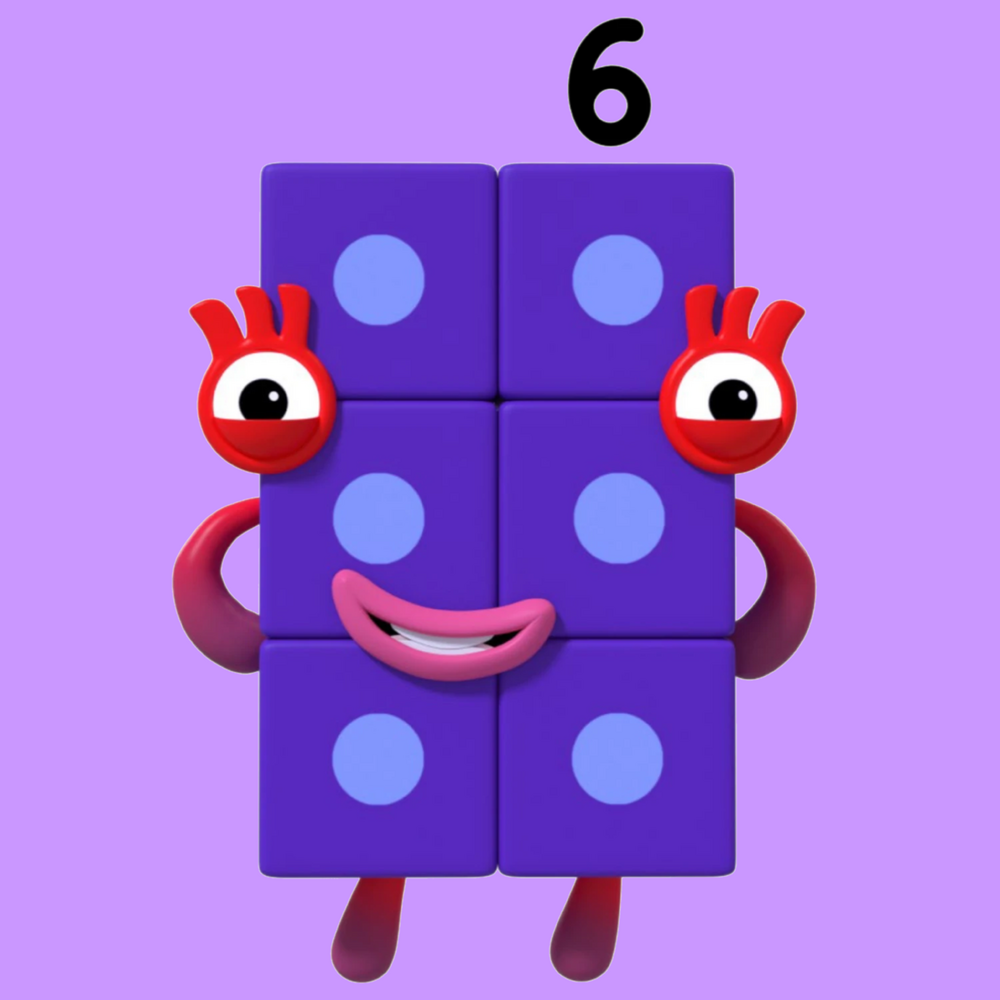
Notice that four is a square, six is a rectangle, and five is the one that does not pack neatly — that mismatch is the seed of "factors" and "prime numbers" twenty years before either word arrives at school. You do not need to mention it. The kid will arrive at it on their own the day they try to make seven in a square and discover that they cannot.
Character images © BBC / Alphablocks Ltd. Used here as creative reference; Block Builder and epotli are not affiliated with Numberblocks.
After the basics: small additions
Once your child can build any single-digit number on demand, the next step is showing them addition as combining two builds. The script:
- "Build a 3."
- "Build a 2 next to it."
- "How many altogether? Count them."
- After they count: "3 and 2 makes 5. Want to write it?" Then write
3 + 2 = 5on a piece of paper next to the blocks.
That last step is the only place you introduce the symbols. The symbols are a label for the thing they just did with their hands. This is the order that works: blocks first, count second, written sum third. Doing it the other way — symbols first, then trying to back-fill with blocks — is what flashcards do, and is what we wrote about in how to teach addition without flashcards.
When to graduate to the next thing
Two signs your child is ready to move past block-building as the main maths activity:
- They can build any number from one to ten without counting from one. They just know seven looks like this. That is called "subitising" and it is the cognitive checkpoint that all of school maths sits on top of.
- They can add two single-digit numbers using objects without you prompting. They reach for the blocks themselves when you ask "what's 4 and 3?".
When both are true, your child is ready for paper sums up to ten and for a low-pressure practice game like MathBird, which sizes itself to wherever they are. Block-building does not stop being useful — it stays as the fall-back the child returns to whenever a sum looks confusing on paper.
A note on screen vs. physical
Many parents ask whether a screen version of this activity is "as good" as physical blocks. The honest answer: physical is better for under-fives, the two are roughly equivalent for five-to-seven, and the screen has a clear edge in two specific moments. The first is when you are travelling and a bag of blocks is not practical. The second is when the child wants to show off the build — saving a PNG to the family group chat is a stronger reward at six than carrying a Lego figure to the dinner table.
For everything else, mix and match. The brain does not particularly care which surface the number was built on, as long as the number got built.